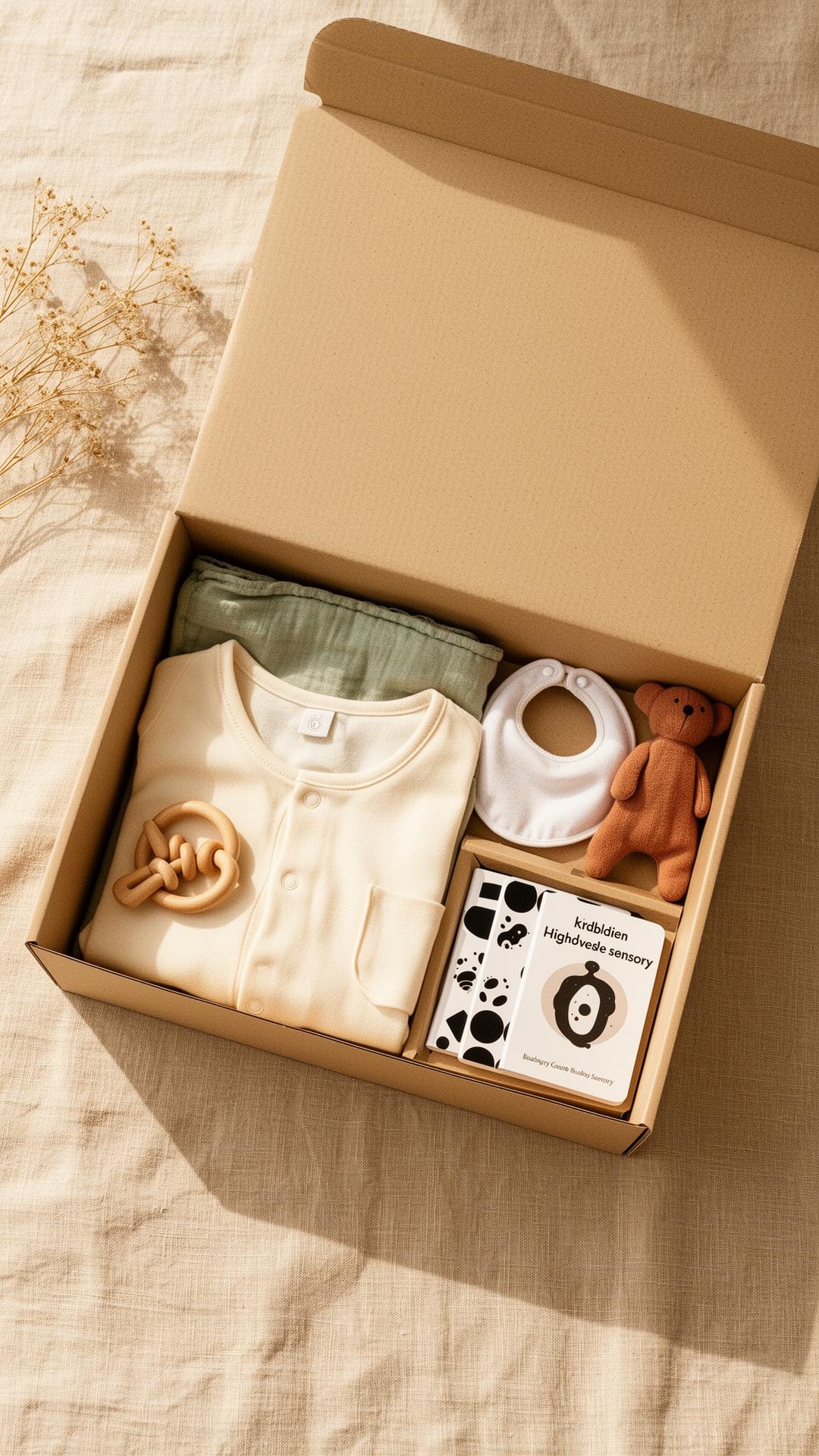
Sensory Play in the First Six Months: A Simple Guide for New Parents
Sensory play sounds elaborate. In the first six months, it's anything but. Here's a gentle, week-by-week guide to what your baby is taking in — and how a handful of items can help.
By the Jumble Dream team · July 2025
"Sensory play" can sound like something that requires a Pinterest board and a free afternoon. In the first six months, it's almost the opposite: it's the small, ordinary moments when your baby is taking in the world through their senses, and you're alongside them.
Here's a calm, no-pressure way to think about it.
Weeks 0–6: focus on faces and contrast
Newborns see best at about 20–30cm — roughly the distance from your arms to your face. They love faces, especially yours, and they're drawn to high-contrast patterns. You don't need much: a few black-and-white cards propped up during nappy changes, plenty of face-to-face time, and a soft voice describing what's happening.
Weeks 6–12: tracking and sound
Around six weeks, you'll often see the first proper smiles, and a little later, the start of tracking — eyes following a slowly moving object or face from side to side. A soft rattle moved gently across their field of vision is enough. Singing, talking, and exposing them to different gentle sounds — running water, rustling pages, your humming — all count.
Months 3–4: reaching and grasping
Hands become the star of the show. Babies start to bring their hands together, swipe at objects, and eventually grasp. A wooden grasping toy or a soft ring is perfect — light enough to lift, big enough to find, interesting enough to hold attention. Tummy time gets easier as neck and shoulder strength builds.
Months 4–6: mouths, textures and mirrors
Everything goes in the mouth, and that's developmentally healthy. Safe silicone teethers, textured fabrics and crinkle toys all support oral and tactile exploration. Mirrors become fascinating; a baby-safe mirror at the edge of a play mat can hold attention for surprisingly long stretches.
Books, even now
Read to your baby from the start. The plot doesn't matter; the connection does. A sensory book with flaps and textures gives them something to interact with as well as listen to.
What to ignore
You can safely ignore most of the noisy, flashing, battery-powered toys marketed at young babies. They tend to over-stimulate rather than invite engagement. The simpler an item is — natural materials, clear shapes, gentle colours — the more your baby tends to get out of it.
And finally, you
The single most powerful sensory experience your baby has in the first six months is you: your voice, your smell, your face, the rhythm of being held. Everything else is a helpful supporting cast.
Commissioning or scoping a scheme?
See how we work with councils, NHS trusts and Family Hubs as a developmental-first baby box supplier.