How to Set Up a Baby Box Scheme in Your Local Authority
A practical, step-by-step guide for council commissioners exploring a baby box programme — from initial scoping and budget to launch, registration and ongoing evaluation.
By the Jumble Dream team · September 2025

If your local authority is considering a baby box scheme, the early planning questions are usually the same: how does this work, what does it cost, who runs the operation, and how do we know it's making a difference?
1. Decide what the scheme is for
Before anything else, agree the purpose. Is the goal to reduce financial pressure on every new family? To support safe sleep across the area? To strengthen take-up of Family Hubs and health visiting? Most schemes do several at once, but ranking them shapes every later decision.
2. Choose universal or targeted
Universal schemes (a box for every baby) signal that the council values every child equally and tend to achieve high take-up. Targeted schemes cost less per cohort but need careful eligibility design to avoid stigma. Both models are valid.
3. Set an indicative budget
Per-box costs vary with contents and volume, but a useful planning range is £50–£150 per box delivered. Multiply by your annual birth cohort and add a modest contingency. A good supplier will quote universal and targeted variants side by side.
4. Pick the operating model
Decide whether to commission a single end-to-end partner or assemble a managing agent plus product suppliers. Either way, look closely at developmental expertise — most baby box providers are logistics specialists, not early-years product specialists.
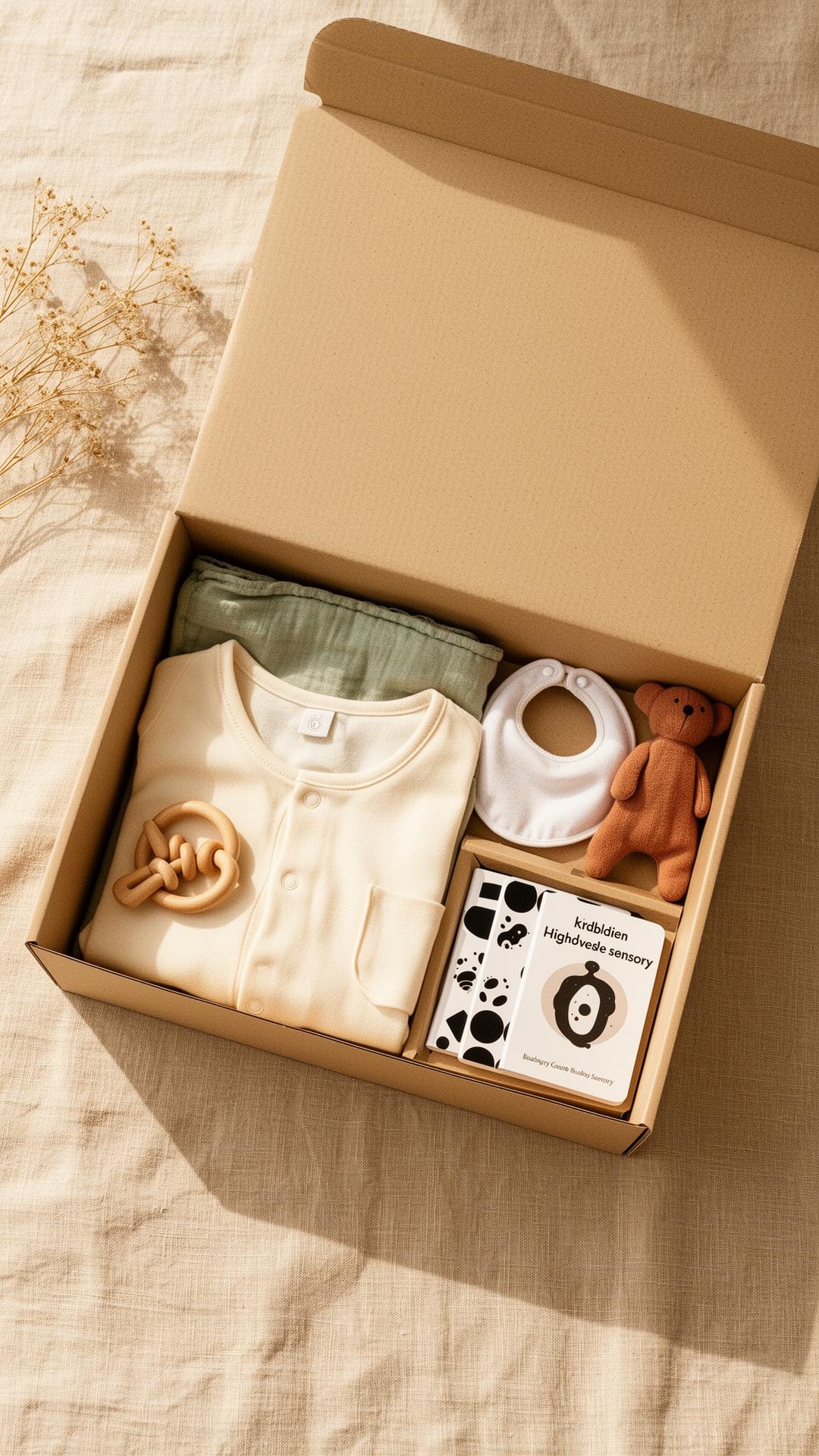
5. Design contents around the first 1,001 days
A good box balances essentials, comfort and care, developmental items, parent wellbeing items, and a thoughtful booklet that signposts local services.
6. Embed registration in existing pathways
Schemes work best when families register through midwives or Family Hubs at the 25-week appointment. Avoid building parallel systems.
7. Plan compliance and data handling early
Confirm EN71/GPSR/REACH documentation for every item, public and product liability insurance, GDPR/DPA, and UK-data-resident registration systems.
8. Measure what matters
Reach, take-up, family satisfaction, connections made to ongoing services. Modest, honest measurement beats elaborate dashboards no one updates.
9. Soft-launch, then scale
Most successful schemes pilot with a few hundred boxes, iterate, then scale. Build the contract to allow revisions between tranches.
If you'd like to talk through any of this, see our our baby box supply for councils and arrange a consultation.
Exploring a scheme for your area? Talk to us about your requirements.
Commissioning or scoping a scheme?
See how we work with councils, NHS trusts and Family Hubs as a developmental-first baby box supplier.